Pietermaai Padel

[Project Details]

Pietermaai Padel

Client: Private
Industry: complex project
Disciplines: Architecture Landscape Interior
Area: 2,800 m2
Time: March 2025
Location: Curaçao
Status: Handed-Over

Share to:

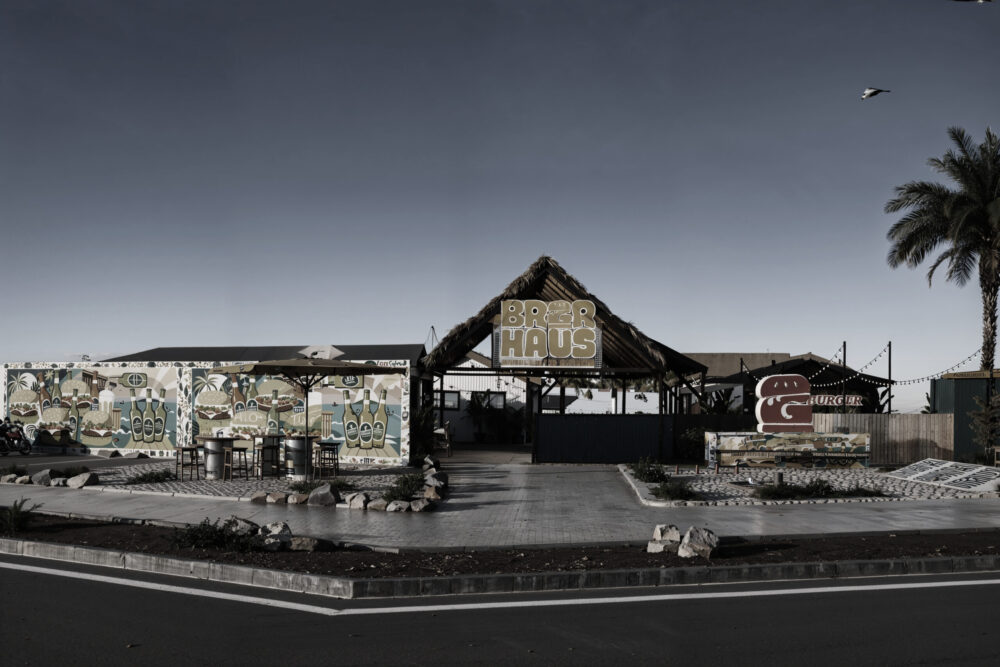
Conceived as an urban condenser, the project concentrates diverse activities into a single architectural gesture that remains calm and legible. A disciplined palette of dark cladding, black metal profiles, and transparent surfaces establishes a refined identity, while vegetation is treated as an active component that softens edges, adds depth, and signals the rooftop as a social destination.

Project Brief

Pietermaai Padel was developed as a mixed-use building that merges complementary programs parking and commercial activity, a padel court as the spatial anchor, and a rooftop configured for consumption and gathering. The central challenge was to integrate these uses without fragmentation, achieving clear operation and a consistent architectural image across the entire envelope.

The design resolves this through a sequence-based organization: each level is understood as part of a continuous promenade that culminates on the rooftop. Transparency is used strategically to expose activity and bring daylight into depth, while the façade system provides unity, rhythm, and a controlled presence that feels contemporary and durable within a tropical context.

Our Solutions
01.
Urban Sequence & Program Logic
Instead of treating each function as an isolated “box,” the building is conceived as a vertical itinerary: arrival, activity, and social pause are stacked as a coherent narrative. This approach strengthens wayfinding and gives the rooftop a true destination quality rather than an accessory level.
02.
Façade as a Unifying System
A single façade language ties together the mixed-use condition through repetition, proportion, and consistent detailing. The dark cladding and black framing create a calm baseline, while glazing inserts moments of openness that reveal key zones and keep the building visually light.
03.
Tropical Layering
Vegetation is integrated as a spatial layer that mediates between the building and its climate: it softens the envelope, filters views, and adds thickness to the façade reading. On the rooftop, greenery frames the social area, improving comfort and atmosphere while reinforcing identity.

04.
Transparency & Daylight Control
Glazed surfaces are used to connect indoor activity with the city and bring daylight deep into the project, supporting a brighter, more open perception. The black framing acts as a regulating grid giving scale, order, and a deliberate rhythm to what could otherwise feel exposed.
05.
Material Discipline & Long-Term Image
The project avoids decorative excess and relies on a disciplined palette to deliver a durable, contemporary character. Texture, contrast, and shadow are treated as primary design tools, ensuring the architecture remains strong and recognizable across different uses and times of day.

By treating the façade and vegetation as a single system, the project achieves a balance between rigor and softness. Architecture becomes both infrastructure and atmosphere—supporting sport, commerce, and social life with one consistent identity.

Design Philosophy

Pietermaai Padel is designed as a controlled urban object: clear in its organization, precise in its envelope, and adaptable in the way it hosts different activities. The goal is not to compete with the tropical context through loud form-making, but to create a calm architectural framework where light, transparency, and movement do the work.

outstanding outcome
Cohesive Mixed-Use Identity: Diverse programs read as one project through a single façade logic.
Legible Experience: The building operates as a clear sequence, from arrival to rooftop destination.
Rooftop Activation: The terrace becomes a social attractor, framed by openness and tropical layering.
Contemporary Tropical Character: Dark material discipline is balanced by transparency and vegetation.
Strong Architectural Presence: A calm, precise envelope delivers recognition without relying on spectacle.
Project Teams
Principal Architect Yma Prins
Architect Designer Andrés Castaño
Architect Designer Dorian Hinestroza
Scroll
Drag
Cart (0 items)